


What Will Your Story Be?
6/7/2025
What will YOUR story be if God “lowers the walls” and allows a surprising and irrational F5 tornado—if God allows Satan to shake and “sift as wheat” your living rooms, your neighborhoods, your jobs, your friends... So that, as in the early days of our adventure, almost exactly 2000 years ago, the good news of Jesus and His kingdom will scatter “to the end of the Earth” in little pockets?
These are three different fictional biographies; two are historical, from persecutions in the first century.
The third and last one, from “Isaac,” is modern-day equivalency of the previous two historical fictional bios.
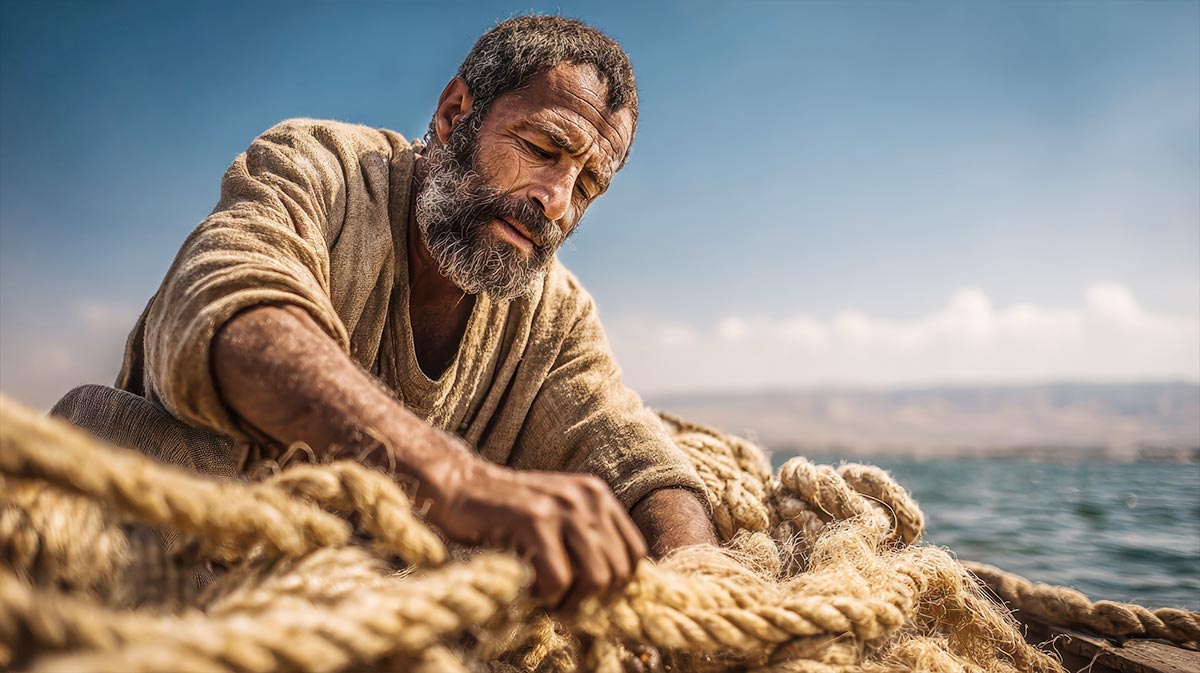
Nicholas
My name is Nicholas. At Pentecost, fire danced on heads, and thousands believed. I joined the apostles in the temple courts, helping distribute food to widows, telling my story to anyone who’d listen.
But Rome does not suffer uprisings. Nor does the Sanhedrin tolerate messiahs who rise from the grave.
Soon, persecution came like floodwaters.
Stephen—my friend—stoned in public while we watched, powerless. Others dragged into courts, whipped, imprisoned. I lost my home when soldiers came in the night and found a scroll of Isaiah marked with Jesus’ words. They called it sedition. They took my tools, smashed my jars of resin, and threw my nets into the street.
My wife and I fled south with only what we could carry. Our son was sick; we had no coins for medicine. She sold her hair for bread. I bartered labor for lentils.
Scattered but Unbroken
We settled eventually near Lydda. A hidden community met under a carpenter’s home. By torchlight, we shared bread, read letters from Paul, and prayed in whispers. Some days, Roman guards passed nearby, and we fell silent like hunted animals. Other days, children sang hymns and it felt like heaven had stooped low.
I worked again—repairing nets by night for fishermen who didn’t ask questions. It wasn’t much, but it was honest. I taught young men the psalms and told them how I had failed to speak up at Golgotha but had found my voice again in the empty tomb.
Now That I’m Old
I’m nearly 70 now. My hands tremble. My wife died in the famine under Claudius. Last I heard, my son declares the good news in Gaul..I still wake with dreams of sandals crunching over dry bones, of torches, of that hill where blood soaked the rocks.
But I also dream of fire falling from heaven... of water rushing over thousands at Pentecost... of the moment I finally knew He was alive and nothing would ever be the same again.
Final Confession
He said we would be sifted. He said the world would hate us. He never promised peace on earth—only peace in Him.
I have lost much: trade, home, family, standing, safety.
But I have gained everything: forgiveness, purpose, a place in the Kingdom, and the right to call God Abba.
And so, if you ask me now, was it worth it?
Yes. A thousand times, yes.
If I had ten lives, I would lose them all for the sake of the One who gave His for me.
His name is Jesus.
He was crucified.
He is risen.
And He is coming again.
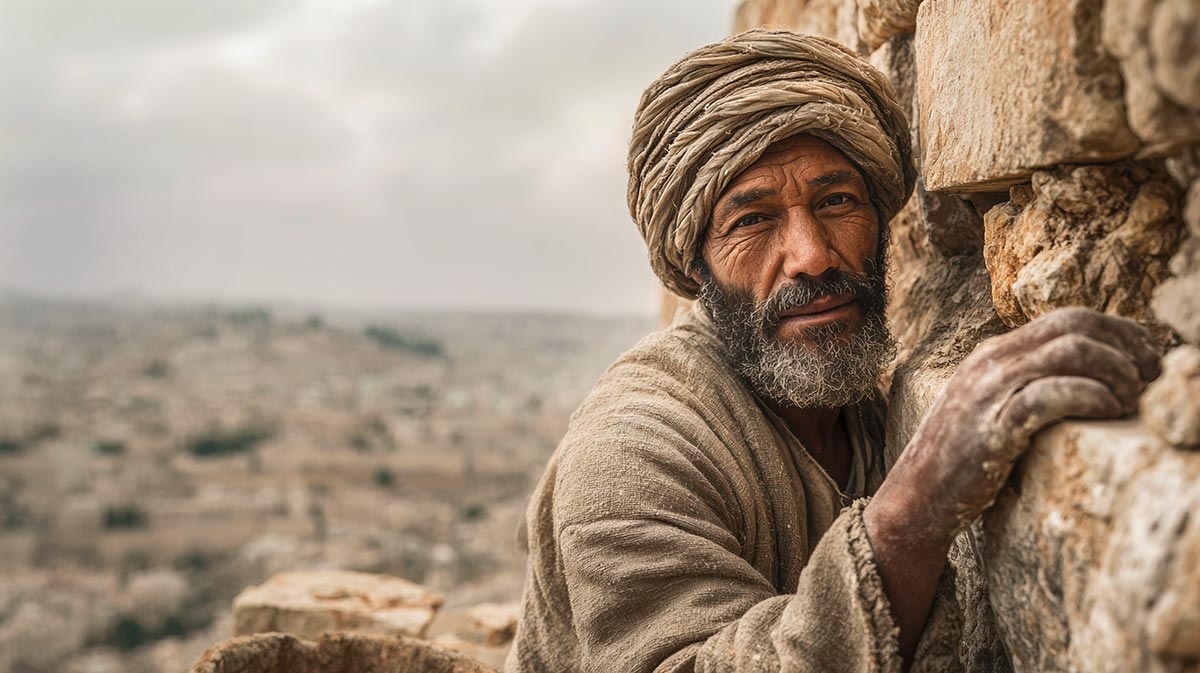
Eli
My name is Eli. I was a stonemason in Jerusalem. The third son of a dry-goods trader, and I saw it all.
I saw Him—Jesus—dragged through the streets, bruised and silent. I heard the hammer echo through the city walls when they nailed Him up like a thief. And I remember thinking, there goes another failed messiah. I went home that day and told my wife to be careful which prophets she listened to.
But three weeks later, my world flipped upside down.
Pentecost and the Great Rush of Joy
It began like a festival day—crowds, colors, heat. But then we heard the noise. Like wind, but with no wind. Like thunder, but no clouds. I ran toward the temple courts. And what I saw, I cannot explain even now.
Men I knew—plain men, fishermen—were declaring truth with fire in their eyes and joy in their voices, and strangers from all over the empire understood them in their own tongues.
I thought they were drunk. Until Peter stood and spoke.
He talked about Jesus—not the teacher we crucified, but the risen Lord we couldn’t kill. His words pierced through the noise of my doubt like a chisel through stone.
That day, I was one of 3,000 who were baptized. I walked into that mikveh a bitter, skeptical builder. I came out a man reborn.
The Days of All Things in Common
I left my workbench for a time. I couldn’t help it. Everything changed. We met daily—under porticoes, in courtyards, in upper rooms. We broke bread and sang psalms until our throats were raw.
There were miracles—cripples leaping, demons cast out, old men dreaming again. But the real miracle? We shared everything. Landowners sold fields. Widows were fed. No one counted coins anymore—we counted souls.
I sold my chisel and took up serving. My wife helped cook for the widows. My brother taught the new Greeks who flooded in. We were a family now, not by blood but by fire.
Sometimes I thought—this is Eden restored.
When the Fire Turned Against Us
The first blow was Stephen.
He shouted out the truth like thunder—too boldly. Too clearly. I was there when the temple guards dragged him out. I followed as they pushed him through the sheep gate. I saw the stones rise and fall. And I heard his last words: “Lord, do not hold this sin against them.”
Something shattered in me that day.
The floodgates opened. Saul—before he became Paul—was a plague upon us. Doors were kicked in. Men disappeared in the night. I carried a toddler through back alleys while my wife clutched our newborn and we wept silently behind storage jars.
They seized my brother. I never saw him again.
They burned the house where we used to meet.
And just like that, the great joy cracked into a thousand pieces.
The Scattering
We fled like birds from a broken cage.
Some went to Samaria. Others north to Syria, some to the coasts. I ended up in Antioch, covered in dust, heart aching, hands empty. I felt like a traitor, like I’d abandoned the city I had once sung over.
But Antioch was waiting. There we found others like us—scattered embers still burning.
We started again. Quietly. Carefully. We met by rivers and in the corners of marketplaces. The joy returned, but it was deeper now—no longer loud and carefree, but tested, weathered, and real.
Years Later: A Different Kind of Fire
I returned to Jerusalem once. Years had passed. The city was colder. Some homes I remembered were ashes. Others had Roman soldiers posted out front. But I found the church still alive. Fewer in number, but stronger in soul.
James, the Lord’s brother, led with quiet wisdom. Peter came and went. Paul sent word from Corinth or Ephesus or Rome.
Persecution never left. Sometimes it lessened. Sometimes it roared back. We learned to live under the shadow of it, not in fear, but in preparation. Like men who build with fireproof stone.
What It Felt Like
What did the persecution feel like?
Like betrayal by your own people. Like losing your friends and wondering if they were arrested or simply too afraid to return. Like hearing your child ask, “Why can’t we go home?”
It felt like choking on fear when soldiers marched nearby... and like breathing freedom when you shared communion with someone who risked their life just to gather.
It felt like confusion—Wasn’t the Messiah supposed to bring peace? It felt like grief—Why does following Him cost so much? But mostly, it felt like fire—not to destroy us, but to purify us.
Final Reflection
We dreamed of a kingdom and healing and a new way of life. And we had it—for a time. But then the shaking came. And the sifting. And still we remained.
I am an old man now, slower with the stone, faster with the tears. But my faith is stronger.
The joy we knew in those early days wasn’t lost. It was buried—in fields, in ashes, in bones. But like a seed, it grows again wherever we go.
Jesus is still worth everything.
Even now, I teach my grandchildren the same song we sang when the fire fell at Pentecost:
“He is risen. He is Lord. And we will not be moved.”

Isaac
My name is Isaac, and I don’t go to church.
Never did, really—at least not like people meant it. No steeples, no stage lights, no bulletins, no “please silence your phones for the sermon.” I don’t think I have ever been in a building assigned for religious functions. Nothing against them, but LIFE and a kingdom of priests can’t happen there—or the building would eventually become an obstacle and nuisance and money sink-hole. Superfluous.
But I’ve walked with Jesus every day for years—in kitchens, in parks, in laundromats, and backyards. I’ve prayed over sick friends at midnight and baptized people in bathtubs and rivers. I’ve broken bread in homes where the floor creaked and the Spirit trembled the walls in a way we all knew and felt. Did not our hearts burn within us as we walked along the way, as we rose up and sat down and traveled and played and marveled at sunsets and enjoyed the childrens’ discoveries and patiently showed them God in their Safe Place?
I used to say, “The church isn’t a place you go—it’s a people you belong to.” Back then, most people only nodded politely.
Now, it’s not just a slogan. It’s survival.
The Days of Overflow
We didn’t organize it. We didn’t market it. We just lived it.
A few of us—some mechanics, baristas, a couple nurses, engineers and programmers, a single mom, some widows—started gathering to pray, eat, and share the Life and His Words. Not once a week—daily, spontaneously, whenever we could. No one led every time. No one got paid to be special or in charge or to “organize” or control. We just loved Jesus and tried to live like He was truly King.
People met Jesus at our dinner tables. In the quiet after a meal, someone would start weeping, and we’d know it was time to listen, to pray, to welcome someone in. Children joined us and listened to things they can’t quite yet understand, but the Seeds are growing. We shared life and love and groceries and money and home repair... like oxygen.
It was messy. A Beautiful mess. Holy. OTHER.
And it grew.
Soon, there were homes and families and even “pastors” all over the world, who had ALWAYS Known there was “more” if the REAL, Resurrected Jesus is actually leading real-time, instead of a slogan and topic. Just people living like Jesus is real and the Spirit is alive.
I thought, This is it. This is the kingdom coming on earth as it is in heaven.
But then came the shaking.
When the World Turned
At first, the pressure was soft—labels, disapproving glances, lost friends, and online slander and malicious deceit intended to harm, as with Jesus, “out of jealousy” of the Life they will never have or have again. They will not “have this Man, ‘if it be lawful to call Him a man’ Jesus—be King over them.” They said we were “spiritually manipulative” “intolerant” because we insisted that “saving Faith” is not “Yeah, but I believe the Bible and I believe in God because I attend services and tithe. And grandma raised me to be a christian.” No. Faith is despising the world and things of the world, in it but no longer OF it, no Plan B, no compromise. The Kingdom benefits are only for those who “at the name of Jesus” fall to their knee and let go of what’s in their hands they were grabbing on to. The “Rich Young Ruler” discovered this fact from the very lips of Jesus Himself, God in the flesh, and everyone was nearly as surprised as Rich was. But here we are. And if we believe what Jesus said is the only REAL Door into the Kingdom of God is THAT kind of abandoned Faith, not intellectual or tears during a “service” we are the enemy to be lied about and attacked—as He was. “If they hated me, they will hate you. And the tree is maturing, no longer green, as it was in my Day here,” said Jesus. We were called “threats to society” because we refused to bow to every new cultural dogma or religious tradition.
We didn’t protest. We just kept living like we always had—loving, forgiving, serving, telling the truth.
But the lies multiplied.
Jealous, angry folks with guilty consciences and pasts (we had tried to cover them and not humiliate them as we pulled the Life away from them) decided to retaliate, rather than find God. Like the “Miller” in the Calvin Miller classic trilogy, The Singer, The Song, and The Finale, he “could have been healed.” But his hard, defiant heart and seared, prideful conscience turned into a demonic fire in his brain. “Crucify him!” The media ran with it. Zoning laws. “Hate speech” restrictions. Financial investigations.
And then the attacks.
One night, three families had their homes vandalized. Homes and reputations smeared with excrement. Notes reading, well, I won’t say.
Then came job losses. My wife was let go when she refused to use false gender pronouns during coworker interactions. I lost my contract work when clients found out I had been part of “unauthorized, religious gatherings.”
I wasn’t angry. I was stunned.
We weren’t troublemakers. We weren’t political. We just lived simple kingdom lives—Spirit-led, table-centered, truth-tethered.
But the world didn’t care. They hated us because of who we belonged to.
The Scattering — Again
Eventually, they came for our house.
Most weren’t yet arrested. Just... evicted. “Violation of occupancy codes” they said. But we knew the real reason—too many non-relatives in the house. Too much light in one place.
So we scattered. By force and hatred and lies, and the confusion slung at us to hurt our hearts and press us to question loyalties based on “facts”—the Tree of Knowledge—and illusions and deep-fakes of every kind. But we held on passionately to what we knew of the Tree of Life, against everything satan could throw at us, trying to make us go to the other tree for “information.”
Some moved into rural areas. Some into RVs. Some into affordable housing or in abandoned places. Those of us who were still close together began “crossing paths” intentionally in the woods, in parking garages, in parks, briefly in ever-changing homes. We used apps to send encrypted messages, hiding meetups like early believers living in tunnels under Rome.
We were no longer just a community. We were a resistance—not against man, but against the spiritual darkness that wrapped the world in half-truths and artificial light.
And here’s the thing:
We still met daily. We still prayed. We still shared everything—even more now, because survival depended on it.
We laid hands on the sick under the stars. We discipled teenagers while foraging for food. We passed handwritten pages of Scripture from group to group when Bibles were confiscated or banned.
And in that fire, we found gold.
The Sifting of the Heart
The biggest battle wasn’t the government.
It wasn’t the mobs or media or police or the useful-idiot thugs puppeteered by Lucifer, “matrix grandma-turned-Agent.”
It wasn’t the loss of home, job, or normalcy.
It was inside—the daily whisper: You can just blend in. Stop speaking. Just smile and nod. It’s safer to hate or be skeptical like everyone else.
But I had to ask myself, “what do they have that I want, and what can they take from me that I really need?” Nothing.
It was the serpent’s voice from Eden and the desert:
Did God really say?
Bow just once—no one has to know.
Don’t speak truth... just speak “kindness.”
We had to die to ourselves again. Not in theory—actually. We had to ask, Is Jesus enough when you have nothing left but Him?
And He was.
Now
It’s 2026.
We’ve lost much. But we have not lost each other.
And more than that, we have not lost the King.
I’ve watched a 10-year-old lead a 60-year-old to Christ. I’ve seen food multiply when we had none. I’ve seen people sing after losing everything.
We are not waiting for Sunday, called “the Christian Sabbath” mostly by those who are covertly making the same choice the rich young ruler did—wanting dual citizenship with God and the world.
Those who bow to the world and its pressures and its desires are “enemies of God.” And yet this Truth shall set you Free indeed!
We are the Church—every day, everywhere.
And yes, the sifting has come. Simon Peter, Job, 20,000 new believers, and the Real Zoe-Life Together Christians Living in AD 60 when the world crumbled, and now today, when all “though none go with me, still I will follow” Christians—experience just what Jesus said. Faith refined in the fire turns us into PURE gold that reflects Jesus’ face and deepens our participation in the God nature, the divine nature, as Peter said.
Some fell away. Some betrayed us. Some still pretend. But the remnant? We burn with INEXPRESSIBLE JOY.
Jesus said the gates of hell would not prevail against His Church.
He didn’t mean a building. He meant us.
We’re still here.
In living rooms.
In fields.
In caves.
In silence.
In song.
The Kingdom still comes. And the King still reigns.
Even in the fire.
Especially in the fire.
⸻
This is where purity of heart shows itself. As Watchmen Nee said, the clumsy man does not appear clumsy when sitting in a chair. The foolish man does not appear foolish pontificating to minions in secret, but only when he has to show his character “in the heat of the day.” Those who do not purge judgment, arrogance, vanity, love of acclaim, pride, fear, selfishness, love of the world, fellowship and admiration with the world... name your thing... are not acceptable to God now and certainly will be unable to hide their true colors if pressure comes. Those will be the quitters and the betrayers.
Maybe it’s a good thing to purge our hearts now so that “when the Day comes” we will actually be useful to God himself, rather than “a useful idiot” to satan, thinking we are doing God a service when really our flesh and delusion is driving us.
“This path will lead right down into the deepest situation of human powerlessness. The follower becomes a laughingstock, scorned and taken for a fool, but a fool who is extremely dangerous to people’s peace and comfort, so that he or she must be beaten, locked up, tortured, if not put to death right away. That is exactly what became of this man Jeremiah, because he could not get away from God.” —Dietrich Bonhoeffer
“...[Jeremiah] was upbraided as a disturber of the peace, an enemy of the people, just like all those, throughout the ages until the present day, who have been possessed and seized by God, for whom God had become too strong... how gladly would he have shouted peace and Heil with the rest...” —Dietrich Bonhoeffer; Jeremiah 20:7; London; January 21, 1934
“The triumphal procession of truth and justice, the triumphal procession of God and His Scriptures through the world, drags in the wake of the chariot of victory train of prisoners in chains. May He at last bind us to His triumphal carriage so that, although in bonds oppressed, we may participate in his victory!” —Dietrich Bonhoeffer
⸻
1“Truly, truly, I tell you, whoever does not enter the sheepfold by the gate, but climbs in some other way, is a thief and a robber. 2But the one who enters by the gate is the shepherd of the sheep. 3The gatekeeper opens the gate for him, and the sheep listen for his voice. He calls his own sheep by name and leads them out.
4When he has brought out all his own, he goes on ahead of them, and his sheep follow him because they know his voice. 5But they will never follow a stranger; in fact, they will flee from him because they do not recognize his voice.”
6Jesus spoke to them using this illustration, but they did not understand what He was telling them. 7So He said to them again, “Truly, truly, I tell you, I am the gate for the sheep. 8All who came before Me were thieves and robbers, but the sheep did not listen to them. 9I am the gate. If anyone enters through Me, he will be saved. He will come in and go out and find pasture. 10The thief comes only to steal and kill and destroy. I have come that they may have life, and have it in all its fullness.
11I am the good shepherd. The good shepherd lays down His life for the sheep. 12The hired hand is not the shepherd, and the sheep are not his own. When he sees the wolf coming, he abandons the sheep and runs away. Then the wolf pounces on them and scatters the flock. 13The man runs away because he is a hired servant and is unconcerned for the sheep.
14I am the good shepherd. I know My sheep and My sheep know Me, 15just as the Father knows Me and I know the Father. And I lay down My life for the sheep. 16I have other sheep that are not of this fold. I must bring them in as well, and they will listen to My voice. Then there will be one flock and one shepherd.
17The reason the Father loves Me is that I lay down My life in order to take it up again. 18No one takes it from Me, but I lay it down of My own accord. I have authority to lay it down and authority to take it up again. This charge I have received from My Father.”
19Again there was division among the Jews because of Jesus’ message. 20Many of them said, “He is demon-possessed and insane. Why would you listen to Him?”
21But others replied, “These are not the words of a man possessed by a demon. Can a demon open the eyes of the blind?”
22At that time the Feast of Dedication took place in Jerusalem. It was winter, 23and Jesus was walking in the temple courts in Solomon’s Colonnade. 24So the Jews gathered around Him and demanded, “How long will You keep us in suspense? If You are the Christ, tell us plainly.”
25“I already told you,” Jesus replied, “but you did not believe. The works I do in My Father’s name testify on My behalf. 26But because you are not My sheep, you refuse to believe. 27My sheep listen to My voice; I know them, and they follow Me. 28I give them eternal life, and they will never perish. No one can snatch them out of My hand. 29My Father, who has given them to Me, is greater than all. No one can snatch them out of My Father’s hand. 30I and the Father are one.”
31At this, the Jews again picked up stones to stone Him. 32But Jesus responded, “I have shown you many good works from the Father. For which of these do you stone Me?”
33“We are not stoning You for any good work,” said the Jews, “but for blasphemy, because You, who are a man, make Yourself out to be God.”
34Jesus replied, “Is it not written in your Law: ‘I have said you are gods’? 35If he called them gods to whom the word of God came—and the Scripture cannot be broken— 36then what about the One whom the Father sanctified and sent into the world? How then can you accuse Me of blasphemy for stating that I am the Son of God?
37If I am not doing the works of My Father, then do not believe Me. 38But if I am doing them, even though you do not believe Me, believe the works themselves, so that you may know and understand that the Father is in Me, and I am in the Father.”
39At this, they tried again to seize Him, but He escaped their grasp.
40Then Jesus went back across the Jordan to the place where John had first been baptizing, and He stayed there. 41Many came to Him and said, “Although John never performed a sign, everything he said about this man was true.” 42And many in that place believed in Jesus. (John 10)
 Are You On Board With Absolutely Anything God Wants?
 Random
 Related
 A Mask Versus God's DNA
 Languages
